How Casino History Moved from Private Parlours to Public Screens
Casino history shows how gaming moved from private rooms to public venues and screens, helping readers separate cultural portrayals from health evidence.
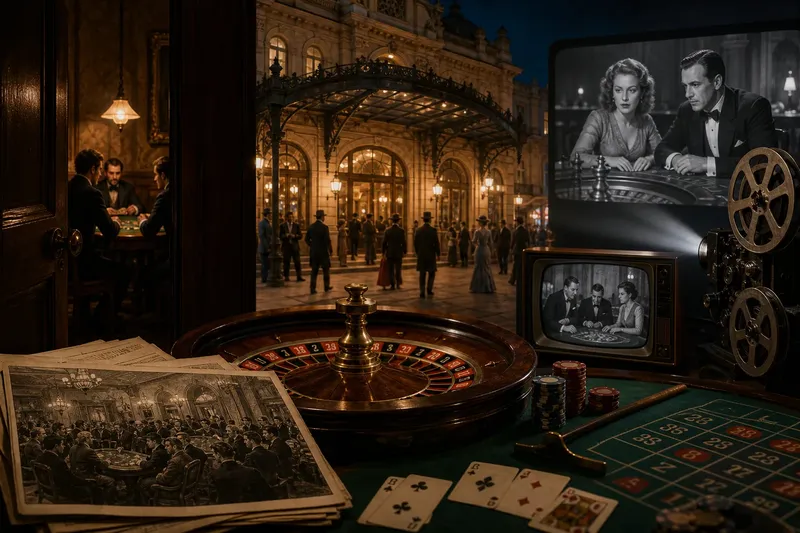
The common mistake in telling casino history is to treat “parlour to screen” as a tidy sequence in which one setting simply replaced another. That blurs the real change: private gaming rooms, public venues and screen entertainment have overlapped, while each has made gambling visible to different audiences. Casino history is more useful when it shows how settings shape what people can see and discuss.
Private gaming rooms made access depend on invitation
Before the modern casino became a recognisable public venue, gaming took place in varied settings, including private rooms and clubs. “Parlour” is a useful image of enclosed, socially bounded play, but it should not be mistaken for a universal stage in casino history. Access, rules and customs differed by place and period.
That distinction matters in public health education. A private room makes participants and their relationships central while leaving outsiders out of view. It can prompt questions about who had access, but a fictional parlour cannot establish how common gambling was or what effects it had on a population.
Ask who is admitted to the room, and whose experience the story cannot show.
Public casinos made gaming visible as a destination
Some European resort destinations developed public gaming venues that were presented as part of a visit, alongside hospitality and local social life. Rather than treating a particular town or building as proof of a universal historical shift, it is safer to ask what a specific source can establish: its location, date, purpose and intended audience.
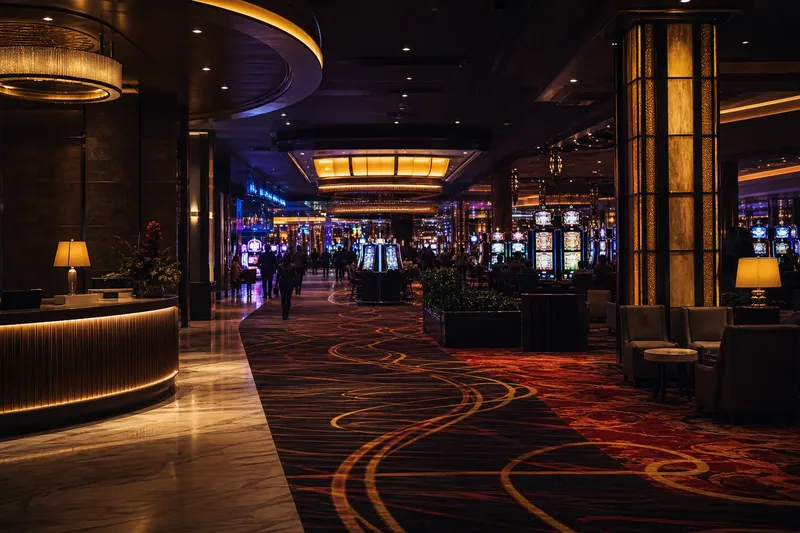
A public venue offered a different visual vocabulary: entrances, gaming rooms, staff, rules and visitors arriving from elsewhere. People who never entered could still encounter the casino through descriptions and images, making it part of a wider cultural conversation. “Public” did not mean equally accessible to everyone; local law, class and custom could shape who was admitted.
For health education, distinguish a venue’s public presence from the private choices made within it. One does not automatically explain the other.
Mass media carried casino imagery beyond the venue
Newspapers, photographs, film and television brought casino settings to audiences at a distance. Screens did not replace buildings; they made images of gaming portable. A viewer could recognise a roulette wheel, a gaming table or an ornate room without visiting a casino.
Film and television shape those images through selection and editing. A story might emphasise glamour, suspense or conflict while leaving routine experiences outside the frame. Such choices tell us how a work constructs its subject, not how often a particular health experience occurs in real life.
Imagine a class watching an invented short scene set in a resort casino. A character enters with friends, hesitates at a table and leaves after a companion suggests a walk outside. The group records those visible actions, then notes that the scene gives no information about finances or wellbeing. The result is a discussion grounded in what the story shows, not an unsupported claim about real people.
Check each source before drawing a health conclusion
Use these checks to separate what a setting or image shows from what it cannot establish:
- Private room: Check whether entry depends on invitation or membership. If it does, treat the scene as a view of a particular group; if it does not, identify what other limits still shape access.
- Public venue: Check whether the source names a place, period or admission rule. If it does, keep claims within that context; if it does not, avoid presenting the venue as representative and seek a more specific source.
- Newspaper or photograph: Check for a date, caption and publication context. If these are present, use them to describe the image’s setting; if they are missing, treat the image as unverified and look for its original record.
- Film or television scene: Check what the camera shows and what editing leaves out. If consequences are shown, describe only those depicted; if they are omitted, do not infer a health outcome.
- Classroom or community discussion: Check whether participants separate historical detail from present-day support information. If they do, continue within that boundary; if they do not, pause and consult an appropriate local public health or support service.
- Public-facing health message: Check whether it names a source and gives a practical route to help. If both are clear, use it for its stated purpose; if either is unclear, verify the information with a qualified local service.
Say a tutor brings an invented newspaper illustration of a crowded gaming room with no date or caption. The class records the visible details—tables, a room and several people—then checks the archive catalogue for the image’s publication and location. If those details cannot be confirmed, the class decides not to use it as evidence about a particular period. The resulting answer is limited but sound: the illustration depicts a gaming room, while its historical context remains unknown.
How should casino history inform health discussions?
Did public casinos replace private gaming rooms?
No. Public venues became prominent in some places, but private and club-based gaming did not vanish everywhere. Treat the change as an expansion and reorganisation of settings, not a single universal replacement.
Why did screens change the casino’s cultural reach?
Film and television carried recognisable casino imagery into homes far from gaming venues. Their scenes still reflected choices about framing and plot, rather than providing a complete account of everyday life.
Can a casino scene establish a health fact?
A scene can show what a particular story depicts, but it cannot establish how common an experience is or what outcomes occur across a population. For practical support or health information, use dependable local services and consult a qualified professional where appropriate.
Public visibility is not the same as public evidence
The movement from private rooms to public venues and screen imagery changed who could encounter the casino as an idea. It did not make every depiction equally informative. A building can tell us about a venue’s public role; a film can show how its makers framed a story; neither alone answers every question about health.
Casino history is most useful when the setting, period and source stay together. When discussion turns from cultural history to someone’s health or need for support, use the story to frame a question, then turn to dependable local information. That distinction keeps a cultural discussion grounded while pointing readers towards help suited to the question.