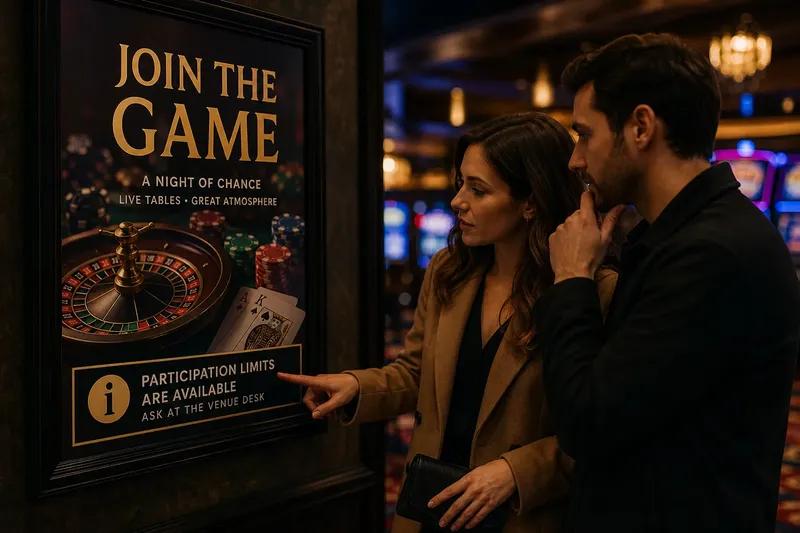
A Casino-Themed Group Evening with Room for a Change of Plan
Plan a casino-themed group evening with clear boundaries, enjoyable non-gambling options and an agreed alternative that lets everyone change course.
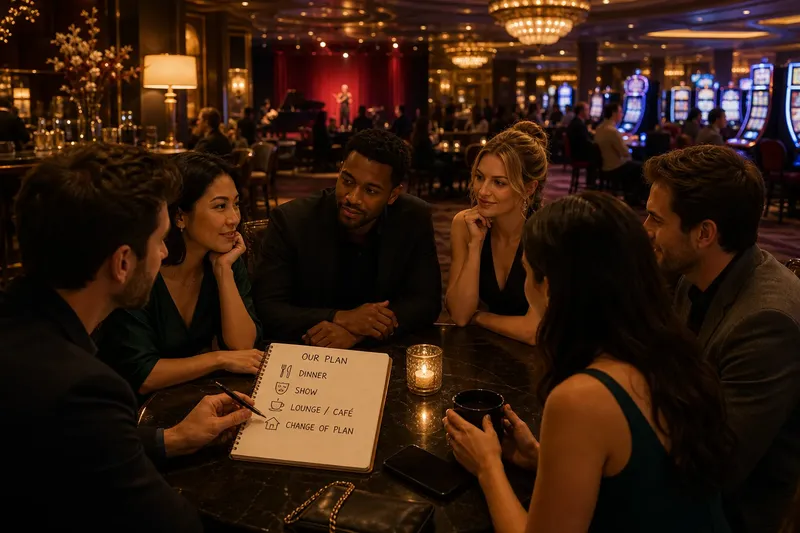
The most common planning mistake for a casino-themed group evening is treating the casino as the whole plan. That can leave someone who does not want to gamble feeling awkward, or turn a change of mind into a negotiation in front of friends. A little agreement beforehand makes room for the evening to be enjoyable without asking everyone to make the same choices.
Decide what the group is gathering to do
Start with the shared purpose, not the venue. Perhaps the group wants to dress up, see a show, have dinner, enjoy the atmosphere or catch up together. Naming the purpose gives the evening an identity that does not depend on gambling.
Then distinguish the venue from the activity. A casino may offer restaurants, live entertainment, lounges or other social spaces, but the available options vary. Check the venue’s current details and make sure the central plan works for people who will not enter a gaming area or place a bet.
Be specific when inviting people. “Dinner and a show at the casino” sets a clearer expectation than “casino night”, which might sound like gambling is the point. If gaming is optional, say so plainly rather than relying on people to infer it.
Agree on boundaries without asking for explanations
A boundary is a limit a person sets around what they are comfortable doing. For a group outing, that might mean not gambling, not lending money, not discussing anyone’s spending, or leaving before the group does. People do not need to give a personal history to have that preference respected.
Ask a neutral planning question in the group chat: “What would make this evening comfortable for everyone?” Offer practical choices, such as meeting at the restaurant, skipping the gaming floor or arranging a separate way home. Avoid singling out one person as the reason for a non-gambling plan.
It also helps to separate agreement from permission. Each person can choose their own activity, while the group agrees not to pressure, tease or repeatedly ask someone to reconsider. If someone wants company away from gaming, arrange that as a normal option rather than a special favour.
Make the non-gambling plan complete
An alternative feels more credible when it is a real part of the evening, not an afterthought. Choose an activity with a clear place and time, and make sure people know how it fits around the group’s other plans. For example, dinner can be the shared anchor, followed by a show or a visit to a lounge.
Check practical details that affect participation: whether the restaurant takes bookings, whether the entertainment needs advance tickets, and whether the venue has suitable access for everyone attending. If people have different budgets or mobility needs, ask about preferences privately or in neutral terms; do not assume one option will suit the whole group.
Say you are organising a birthday evening for six friends. Two people would rather not gamble, and one is unsure about staying late. You book dinner as the shared event, identify a nearby café as a possible later stop, and tell everyone that leaving after dinner is perfectly fine. The observable result you are aiming for is a plan everyone can understand, with more than one comfortable way to take part.
What should the group settle before leaving?
How can I invite people without implying they must gamble?
Name the social activity first, such as dinner or a performance, and describe gaming as optional if it is part of the venue. This lets guests decide with a clearer sense of what the evening involves.
What if someone changes their mind once we arrive?
Treat a change of plan as an ordinary choice, not a disruption that requires an explanation. Agree in advance who can accompany them, where to meet later and how they can get home independently if needed.
Should the group set a spending limit?
The group can agree not to lend money or cover another person’s gambling, but individuals should decide their own spending boundaries. If the evening includes paid activities, state those costs before booking so people can opt in or suggest another arrangement.
What if friends disagree about the main activity?
Return to the shared purpose and look for an activity that does not require everyone to make the same choice. If there is no workable agreement, choose a different venue or divide the evening around a shared meal.
Make the change-of-plan option easy to use
An alternative is only useful if people can take it without having to persuade the group. Agree on a simple signal or phrase, such as “I’m ready for the next part”, and decide what happens next: meet at the restaurant, step out for a break or head home. Keep the arrangement discreet and avoid turning a private choice into a group discussion.
Transport deserves the same thought. People may arrive together but want to leave at different times. Identify public transport, a taxi pick-up point or another suitable way home, and avoid making anyone dependent on a companion who plans to stay later.
Do not treat the fallback as a failed evening. A meal, conversation or performance can be the main event in its own right. If plans change, the group can keep the social purpose while changing the setting or activity.
Keep the agreement flexible and respectful
Before the outing, send a short recap: the meeting point, the shared activity, which parts are optional, and the agreed way to switch plans. Keep it factual and welcoming. A long set of rules can make a relaxed gathering feel like an assessment.
On the night, check in without demanding a public answer. “Are you still happy with this plan?” gives someone room to speak; “You said you were fine earlier” makes it harder to change course. Respecting a boundary includes accepting that a person’s preference can shift.
A casino-themed group evening works best when the invitation promises companionship rather than a particular kind of participation. For a casino-themed group evening, the useful planning question is not how to keep everyone together at every moment, but how to make each person’s next choice clear, voluntary and easy to act on.